




Grosse Arvine
Description
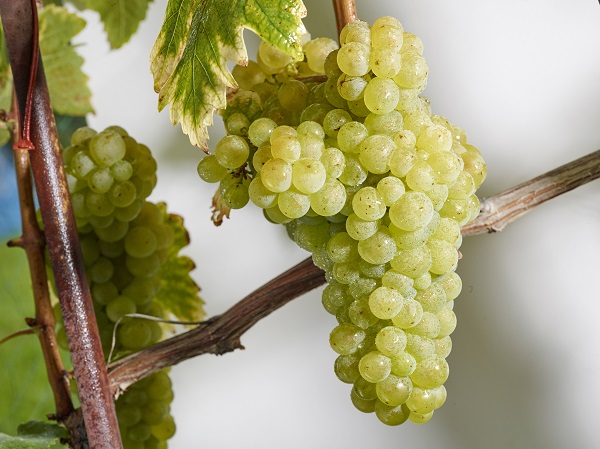
A rarity from the vineyards of Martigny and Fully in Valais, daughter of the Rèze and probable granddaughter of the Arvine, recently saved from extinction.
General and History
Grosse Arvine is a grape variety native to Valais, first mentioned in 1812. From that year onward, it was referred to as "Petite Arvine" to distinguish it from other varieties. It was once widespread in the vineyards of Coquimpey and La Marque in Martigny, which were renowned for their finest Valais wines in the 17th century. A few vines can still be found today in the vineyards of Martigny-Fully-Saillon, including a centuries-old vine in Saxé (Fully). These vineyards are considered the origin of Grosse Arvine, if not of Arvine itself.
DNA analysis has revealed that Grosse Arvine resulted from a natural cross between Rèze, one of the oldest grape varieties in Valais, and an unknown, presumably extinct variety. It is also very likely a natural descendant of Arvine, which would explain its name.
In the 20th century, the Grosse Arvine grape variety, considered coarse, rough, and prone to rot, fell into oblivion in the vineyards of Valais. In 2010, the dynamic winemaker Olivier Pittet from Fully, fascinated by the history of this grape variety and the author's genetic research, decided to revive it. After surveying the vineyards of Martigny-Fully-Saillon in collaboration with the federal agricultural research station Agroscope and the cantonal viticulture office, Pittet was able to locate around sixty individual Arvine vines, either as trellises or single plants among the existing vines. The healthy, virus-free plants were propagated and planted in Fully on 500 m².
Pittet's initiative inspired others: In 2012, Benoît Dorsaz also planted some Arvine vines in Fully, and the Fully winegrowers' association is now also interested in replanting. Perhaps Grosse Arvine will one day be included in the list of approved grape varieties of the AOC (Appellation d'Origine Contrôlée), thus returning to its homeland, Valais?
Grosse Arvine originated from a natural cross between Rèze and an unknown, presumably extinct, grape variety. DNA analysis has revealed that it is very likely a granddaughter of Arvine and a half-sister of Diolle, both from Valais.
(Note: Theoretically, Grosse Arvine could also be the parent variety of Rèze, but this is less likely, as Rèze was first mentioned in 1313, while Grosse Arvine was not mentioned until 1812.)
Distribution in the past and today
0.08 ha, only in Fully (Valais).
Suitability
The first vintage produced in 2014 met expectations: the Grosse Arvine wine offers aromas of cut hay, white peach, grapefruit, with significant but invigorating acidity, and a granular texture with a slight bitterness on the finish.
Literature
·Vouillamoz, J. (2017). Cépages suisses, histoires et origines. Ed. Favre
Leave a Reply
You must be logged in to post a comment.