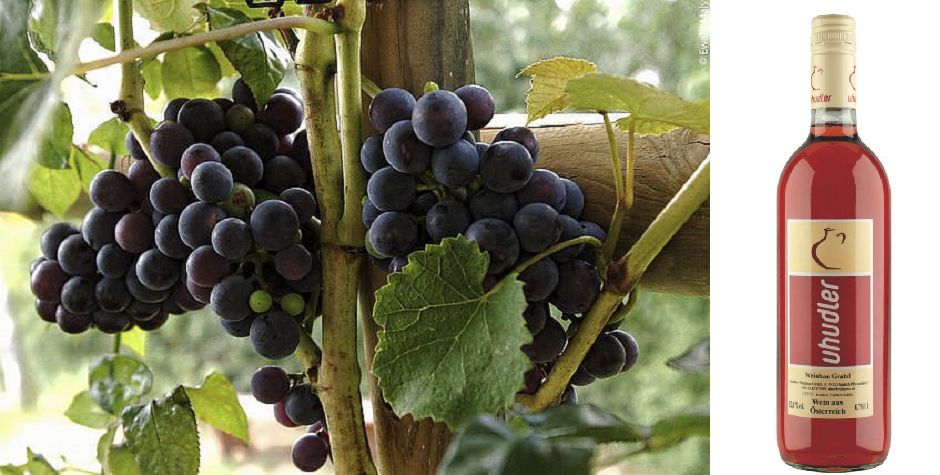


Uhudler
Description
The wine is produced as a blend of grapes from various heritage grape varieties (Concord (= Ripatella), Elvira, Delaware, and six others). It has a very intense flavor (Fox notes). The wine is made from the grapes of hybrid varieties that are direct producers. These possess good resistance to phylloxera and certain fungal diseases.
The grapes are red and, less frequently, white hybrid varieties resulting from crosses between the European species Vitis vinifera and the American Vitis labrusca and Vitis riparia. Due to the higher pectin content of the grapes, the wine has a slightly higher, but harmless, methanol content than wine made from European grape varieties.
General and History
Around 1860, the phylloxera aphid was introduced to Europe and devastated European grape varieties. Various attempts, such as making wine from currants or using lead to combat the aphid, proved unsuccessful. Phylloxera-resistant varieties were subsequently imported from America and crossed with native varieties. Today, European varieties are grafted onto American vines.
For a long time, the legend persisted that wine from direct-producer grapes contained a high proportion of fusel oils and methanol and was therefore harmful to health.[3] Uhudler was first banned in 1938. In the 1970s, Uhudler was restricted in Austria to use as a "house drink." Production for personal consumption was permitted.
Thanks to the intensive efforts of the "Friends of Uhudler" association, Uhudler was reinstated in the Austrian wine law in 1992 as part of an amendment to the wine law and was allowed to be marketed again from August 1, 1992.
In 2004, the designation Uhudler for regionally typical direct-producer grape varieties for southern Burgenland was re-registered at the patent office.
Distribution in the past and today
South Burgenland
Today, Uhudler wine may be produced and sold in limited quantities in eight municipalities in southern Burgenland. In a wine cellar in Heiligenbrunn, there is the "Uhudler Vinothek," where wines made from various grape varieties can be tasted and purchased. Following Austria's accession to the EU, the classification of the seven grape varieties used for Uhudler was required.
These varieties are Concord (or Ripatella, which at that time was still considered a separate variety), Delaware, Elvira, Isabella, Noah, and Othello. They are American hybrids that are widely cultivated on their own rootstock (as ungrafted vines). The three varieties Isabella, Noah, and Othello are generally prohibited for winemaking within the EU.
Utilization
Rustic style wine
Suitability
Resistant to phylloxera.
Cultural technique
The following grape varieties are used for Uhudler: Concord, Delaware, Elvira and Ripatella.
Customs
The term Uhudler has its roots in numerous oral traditions. One widespread legend tells of winegrowers who, after excessive consumption of Uhudler, were greeted by their wives in their cellars with the words, "You look like an owl."
Another story claims that the name originates from a clay vessel called an "Udler" (a type of small, round vessel with two holes). One hole was for drinking, the other for letting air in.
In Austria, direct-producer grapes are also known as "Heckenklescher" or "Rabiatperle."